


Great Pyrenees
Complete Breed Guide
"Beauty and brawn all in one package!"

Quick Facts About Great Pyreneess

Working

85–115 lbs

25–32"

No
Based on current listing prices on Puppies.com. Results may vary.
Overview
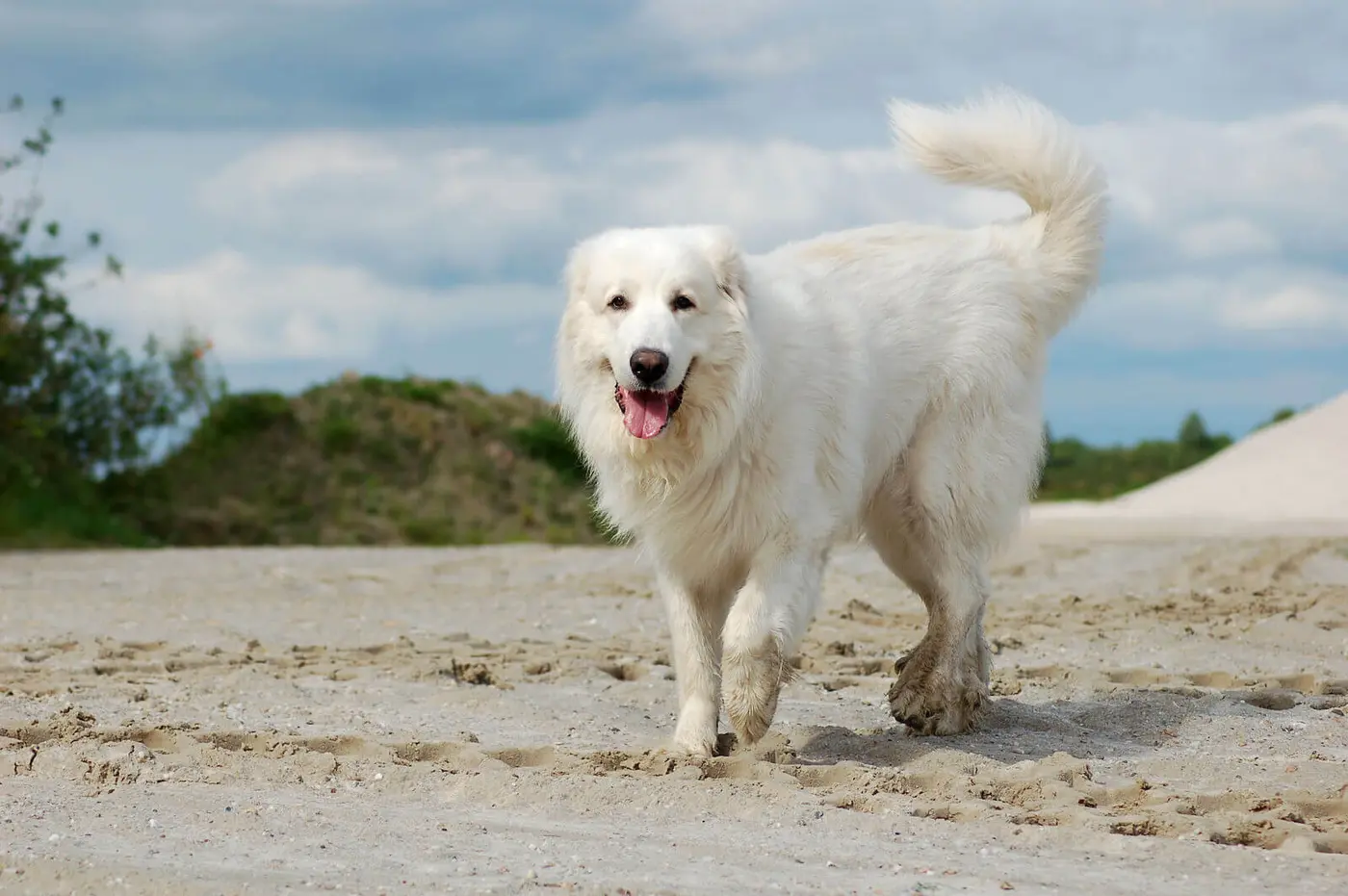
This stunning white dog is as beautiful as their mountainous homeland. Great Pyrenees are loving, large, and in charge. They’re a gentle, family-oriented dog most of the time, but will step in to protect their “flock” if danger is near.
With an impressive presence and beautiful white coat, the Great Pyrenees is a breed that’s easy on the eyes. This breed descends from some of the earliest sheep guardians in Europe and Asia, and although they’ve become more gentle over time, their natural instinct to protect still remains today. Great Pyrenees are good-natured most of the time, but they also have an independent, headstrong side that requires an assertive owner. They get along well with children, dogs, and other animals, but will go to great lengths to protect their families, even at the cost of their life.
Temperament and Behavior
Great Pyrenees are friendly, good-humored, and gentle dogs. They have a calm and loving demeanor most of the time, but their strong, independent streak requires a dominant owner that can keep them in line. These qualities, and their loud bark, make Great Pyrenees good watch dogs and guard dogs, but they may be slower to mature than other puppies. This breed is also known to drool and give their owners wet kisses to show their love.
Coat & Grooming
Great Pyrenees have a double coat of weather-resistant hair. Their outer coat is long, flat, and thick, with coarse hairs that are straight or slightly wavy. The undercoat is dense, fine, and wooly. Most Great Pyrenees are white and some have tan, gray, or light yellow markings on their faces or bodies. As these dogs grow older, their coats get thicker and lighter. Regardless of age, Great Pyrenees need weekly grooming with a brush and comb. When they’re shedding a lot, brush them on a daily basis to remove as much hair as possible.
Lifestyle & Living Conditions
This breed can be a good friend to any dog, animal, child, or visitor. Great Pyrenees may be initially uncomfortable with unknown people and pets, but they become more comfortable over time, especially if they’re socialized early. Because of their origin in the mountains, these dogs don’t enjoy hot climates. The heat may irritate their skin, so they’re better suited for cold climates or indoor spaces. Great Pyrenees are big dogs that enjoy moderate amounts of activity, so they prefer homes over apartments or small spaces.
Exercise & Activity
Great Pyrenees need a fair amount of daily exercise, including at least a leashed walk or playtime in a large yard. This breed is known for running away when off-leash, so make sure all play areas are fenced and secured. Many Great Pyrenees also like swimming and hiking, particularly in cold weather. Puppies shouldn’t be over exercised, because they need all of their energy to grow strong bones and put on weight.
Characteristics at-a-glance
Ratings are on a scale of 1–10, based on breed standards and typical temperament.
Great Pyrenees FAQs
Common questions about the Great Pyrenees breed, answered by our editorial team.
Find Great Pyrenees Puppies
